
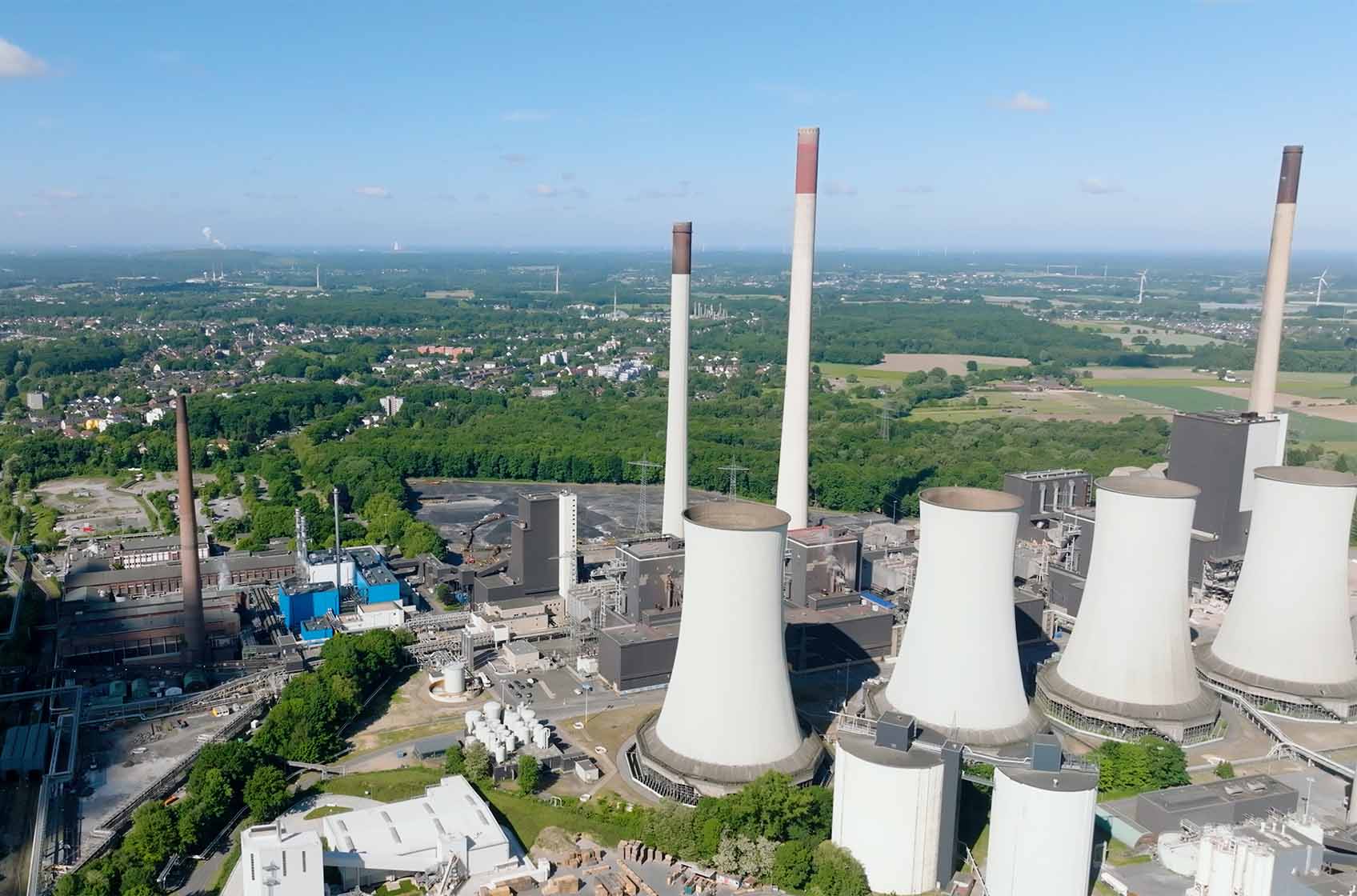
Ammonia Cracking for the Energy Transition
Uniper, in cooperation with thyssenkrupp Uhde, is developing an ammonia cracking plant at the Gelsenkirchen-Scholven site. The demonstration plant is designed to process up to 28 tonnes of ammonia per day, equivalent to around 4 tonnes of hydrogen. The project serves as a proof of concept for a large-scale plant planned in Wilhelmshaven and is intended to generate key insights into performance parameters, flexibility, and economic viability. Commissioning is scheduled for the end of 2026. The project is funded by the Ministry of Economic Affairs, Industry, Climate Action and Energy of the State of North Rhine-Westphalia (MWIKE).
In addition, the partnership between Uniper and thyssenkrupp Uhde aims to bring a key enabling technology for international hydrogen trade to industrial maturity. Ammonia is considered a particularly suitable energy carrier for hydrogen imports, as it can be transported and stored worldwide using established infrastructure. Converting ammonia back into hydrogen at the import terminal is therefore a crucial building block for a hydrogen economy that will depend on both domestic production and imports.
The demonstration plant in Gelsenkirchen-Scholven forms the basis for later large-scale application, particularly at the planned hydrogen import terminal in Wilhelmshaven. Commissioning of the plant is scheduled for the end of 2026. The project therefore makes an important contribution to security of supply, the decarbonisation of energy-intensive industries, and the development of a high-performance hydrogen infrastructure in Germany.
Source: https://www.uniper.energy/news/uniper-and-thyssenkrupp-uhde-join-forces-for-key-technology-of-the-global-hydrogen-economy